
In the high-stakes world of commercial horticulture, the greenhouse frame is far more than a simple support structure; it is the primary safeguard for your biological capital. When managing large-scale global projects, the debate between Hot-Dipped Galvanized, Pre-Galvanized, and Black Steel is not merely a line item on an invoice—it is a calculation of structural integrity under extreme microclimates.
Inside a high-production greenhouse, the environment is a concentrated "corrosion chamber." High relative humidity combines with evaporated nitrates from fertilizers and sulfur-based pesticides to create an electrolyte-rich atmosphere that accelerates steel oxidation.
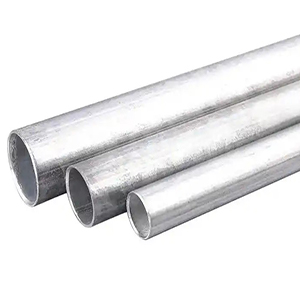
The HDG Advantage: Hot-Dipped Galvanized pipes undergo a complete immersion process, creating a metallurgical bond between the zinc and the steel. Unlike paint, which acts as a simple barrier, the zinc layer provides cathodic protection. If a contractor dings the pipe with a wrench during assembly, the surrounding zinc sacrifices itself to protect the exposed steel. For glass or high-value multi-span structures intended to last 20+ years, this is the industry’s "insurance policy."
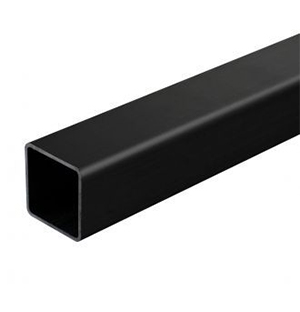
The Black Steel Liability: Using untreated black steel for structural arches is a strategic risk. Beyond the obvious weakening of the frame, the primary victim is often the covering material. As black steel rusts, it creates a jagged, abrasive surface. This surface acts like sandpaper against expensive PO or PE greenhouse films. The result? Wind-induced vibration leads to premature film tearing, forcing a re-skinning of the greenhouse years before the film’s UV-rating expires.
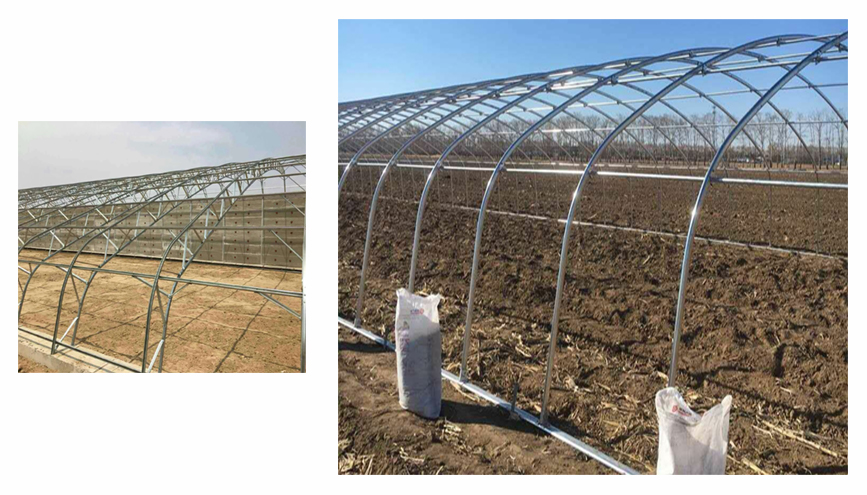
Modern greenhouse engineering is shifting away from traditional round pipes toward Oval Sections. This trend, originating in the demanding climates of Northern Europe and advanced Chinese manufacturing hubs, is driven by structural physics.
Vertical Load-Bearing Capacity: An oval pipe oriented vertically offers significantly higher resistance to bending than a round pipe of the same linear weight. This allows growers to achieve wider spans and higher gutters without the risk of the roof buckling under a "2026-scale" heavy snow load or the weight of hanging crop gutters.
The "Pre-Galv" Sweet Spot: For standard hoop houses or poly-tunnels, Pre-Galvanized steel offers the most attractive ROI. By using steel that is galvanized at the mill before being formed into pipes, you achieve a smooth, uniform finish that is kinder to plastic films at a price point that supports seasonal crop profitability.
A high-performance greenhouse is rarely built from a single type of steel; it is an optimized assembly of specific geometries, each selected for its unique mechanical contribution to the "skeleton." Selecting the correct profile is as much about load distribution as it is about material longevity.
Square and Rectangular Sections: These profiles serve as the critical vertical columns and the structural foundation for "intelligent" glass or multi-span systems. Heavy-gauge specifications—such as 100x100mm, 120x120mm, or 150x150mm—are the industry standard for main load-bearing pillars. Conversely, smaller 50x50mm square tubes are strategically utilized for horizontal tie-bars to ensure lateral stability across the entire span.
Circular Tubes: As the primary secondary load-bearing structure, round pipes form the "hoops" or ribs of the greenhouse. Their geometric symmetry allows them to effectively receive external wind and rain loads before distributing that force down into the main stress-bearing square columns. They remain the most versatile choice for standard hoop houses and poly-tunnels.
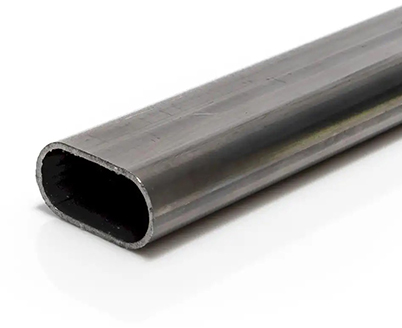
Oval Tubes: A relatively recent innovation, elliptical tubes (typically 30x70mm or 30x80mm) offer significantly higher vertical pressure resistance compared to circular pipes of the same linear weight. This allows for wider spans and better snow-load performance. However, a critical trade-off exists: because most current oval profiles are manufactured from pre-galvanized tape, their long-term anti-corrosion performance is generally inferior to that of high-spec Hot-Dipped circular tubes.
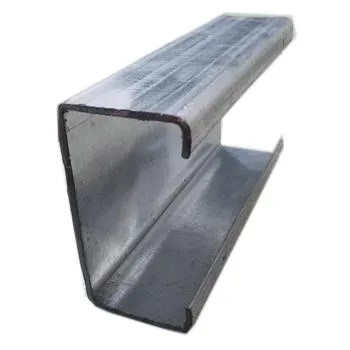
Profile Steel (C-Channels and Specialized Sections): Typically utilized in the roof assemblies of high-tech greenhouses to form the top steel frame. While Profile Steel offers a lower initial cost compared to square pipe, it provides less torsional stability. It is best reserved for specialized applications in regions with lower environmental stress and minimal corrosion requirements.
A greenhouse project can be derailed by a few millimeters of deviation. Global procurement must focus on these two technical benchmarks:
ASTM A500 Grade B: Crucial for rectangular and square columns, this standard ensures the R angle is consistent. If the R-angle is too large or inconsistent, specialized greenhouse clamps and internal connectors will not fit securely. This leads to unstable joints and a nightmare for the construction crew on-site.
Even the best steel requires a maintenance protocol to reach its maximum lifespan:
·Zinc-Rich Cold Galvanizing Spray: Any on-site cuts or welds must be immediately treated with a 95% zinc-rich primer to "heal" the protective barrier.
·Thermal Buffering: In high-heat regions, use "white-out" paint or adhesive anti-hot tapes on the sections of the pipe that touch the greenhouse film. This prevents the steel from overheating and "cooking" the plastic, which shortens the film's life.
·Connection Audits: Every two years, check for "white rust" at the connection points where vibration is highest.
Performance Metric | Hot-Dipped Galvanized (HDG) | Pre-Galvanized | Black Steel |
Corrosion Resistance | 20+ Years (Extreme) | 8-12 Years (Moderate) | Low (Immediate oxidation) |
Structural Profile | Best for Heavy Multi-span | Best for Tunnels/Hoops | Internal/Sub-structure only |
Film Compatibility | Excellent (Smooth) | Excellent (Smooth) | Poor (Abrasive once rusted) |
Total Cost of Ownership | Lowest over 20 years | Best for 10-year ROI | High (due to maintenance) |

TIANJIN YUANTAI DERUN PIPE MANUFACTURING GROUP CO., LTD
